


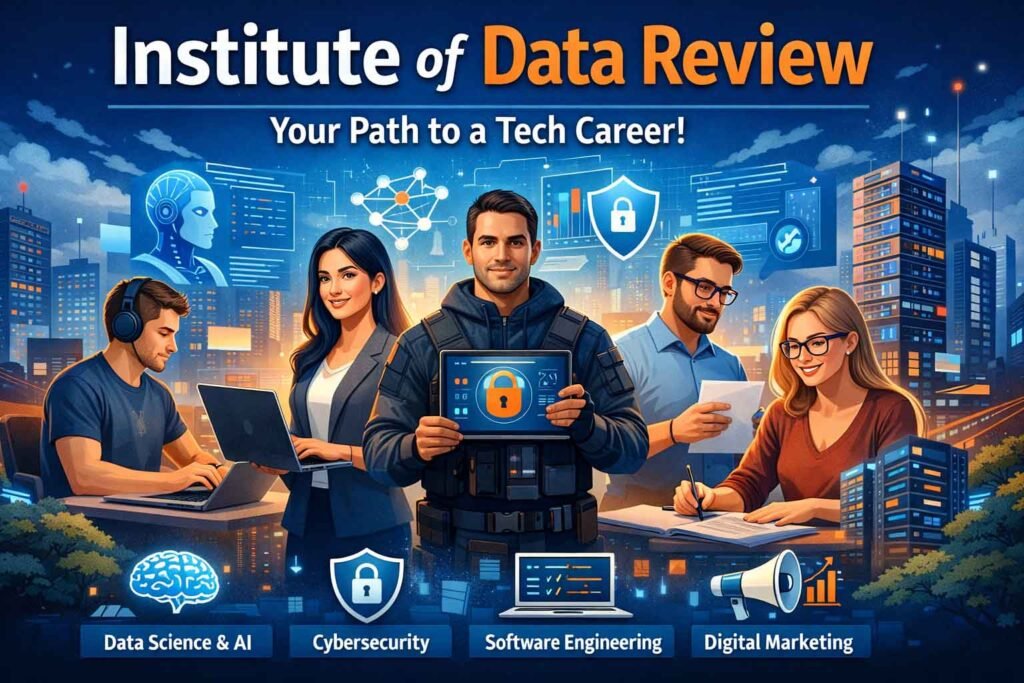
If you are thinking about learning tech skills in 2026, you are not alone. Every year, more people want to move into jobs like data science, AI, cybersecurity, and software engineering. These jobs pay well, they are in high demand, and they offer a lot of growth. But many people do not know where to start.
This is why the Institute of Data Review is such a popular topic. People want to know if this bootcamp can really help them start a new tech career. They want to know if the training is good, if the projects are useful, and if the job support is strong.
In today’s article, we will explore what the Institute of Data is, how it teaches, what you learn, how long the programs take, and who the bootcamp is really for. We will also talk about the main pros, cons, cost, and job support. So let’s get started!
What Is the Institute of Data?
The Institute of Data is a global tech school that helps people learn real skills for real jobs. It offers training in areas like Data Science & AI, Cybersecurity, Software Engineering, and Digital Marketing. Many people join these programs because they want a fast and practical way to get into the tech world.
The school began in Australia and now teaches students from more than 40 countries. It works with well-known universities such as UTS, AUT, and other trusted partners. These partnerships add more value and trust to the certificates students receive when they finish their programs.
Many people choose the Institute because the learning is not just theory. Students learn by doing real tasks, real projects, and real exercises. In many Institute of Data Review posts online, graduates say this hands-on style helped them feel more ready for real jobs. They liked that expert mentors guided them throughout the journey and made the learning clear and simple.
Why People Want Tech Skills in 2026
Tech jobs are growing very fast in 2026. Companies need people who can work with data, build software, protect systems, and understand AI tools. These skills are now part of almost every industry, from finance to healthcare to business.
Today, employers look for practical skills more than long degrees. They want people who can solve real problems. They want people who can show real projects, explain how they think, and work well in teams. That is why many learners choose bootcamps instead of 4-year programs.
Another big change in 2026 is the rise of AI tools. AI makes it easier to write code, clean data, or analyze results. But companies still need humans who can think, explain, and make good decisions. This means reasoning, communication, and problem-solving are now more important than ever.
Because of all these changes, more people are reading Institute of Data Review articles to see if IoD can help them learn these modern, in-demand skills in a short time.
How the Learning System Works
The learning system at the Institute of Data is designed to feel simple, clear, and very practical. The school uses a “project-first” method. This means you learn skills because you need them to solve a real problem, not just because they are in a book.
Students attend live classes led by instructors who work in the tech industry. These teachers explain things in a very simple way and show real examples from real jobs. Many students say in their Institute of Data Review that the teachers were patient, friendly, and easy to understand.
The classes use many tools to keep learning active and fun. You will see digital whiteboards, breakout rooms, group tasks, and live coding sessions. Students also get weekly tasks and labs that help them practice right away. There is also a mentor who checks your work and helps when you get stuck.
This system helps you learn faster because you are not just listening—you are doing. You begin to think like a data analyst, a software developer, or a cybersecurity professional from day one.
Institute of Data Review Pros and Cons
Every program has good points and areas to think about. The Institute of Data is no different. Understanding both sides helps you make a smart decision.
Pros
Many students say the hands-on learning is the biggest benefit. You learn by doing, not by memorizing. This makes the lessons feel real and easier to understand. The teachers are also praised for their clear explanations and industry experience.
Another strong point is the career support. Students receive guidance that helps them feel confident when applying for jobs. Many graduates say this support played a big role in their success. Flexible programs and global partnerships with universities also add more trust and value to the bootcamp.
Cons
Some students feel the cost is high, especially when compared to cheaper online courses. There is no job guarantee, so results depend on your effort. A few learners mention that the program can feel fast and intense, which may be hard for those with limited time.
There are also mixed opinions about refund policies and contract terms. This is why reading every part of the agreement is important. Some reviews mention that expectations should be realistic. Success comes from hard work, not shortcuts.
Full and Part-Time Study Options
The Institute of Data offers two learning formats: full-time and part-time. Both follow the same curriculum, but the pace is different.
The full-time program lasts about 12 weeks. This option is great for people who want to change careers quickly and can study almost every day. You spend many hours learning, practicing, and working on projects. It feels like a full-time job because you are focused only on learning.
The part-time program runs for about 24 weeks. This is a better fit for people who work during the day or have other life responsibilities. Classes happen in the evenings or on weekends. You still learn everything the full-time students learn, just at a slower and more flexible pace.
Both options include live sessions, mentorship, career help, and hands-on labs. Many students say in reviews that they liked having two choices, because it allowed them to study in a way that fit their life.
What You Learn Week by Week
Every program at the Institute of Data follows a clear path. The early weeks focus on basics. Then the program slowly moves into harder topics. By the final weeks, students are working on full projects that feel very close to real job tasks.
For example, in the Data Science & AI program, the first weeks teach Python, simple math, and basic data ideas. Then students learn SQL, data cleaning, and machine learning models. Later, they learn deep learning, clustering, dashboards, and even new topics like large language models.
Cybersecurity students start with network basics and simple security tools. As the weeks pass, they learn ethical hacking, penetration testing, threat detection, and real-world incident handling.
Software engineering students start with HTML, CSS, and JavaScript. Then they move to React, backend frameworks, databases, API building, and cloud tools like Docker or AWS.
Every week builds on the last. Every lesson leads to a small project or task. This slow and steady growth helps even beginners learn complex topics without feeling lost.
Capstone Projects and Real Work Skills
The capstone project is one of the most important parts of the Institute of Data programs. It is a big final project where you use everything you learned to solve a real problem. This project becomes part of your portfolio and helps you show employers your skills.
For example, past students have built tools like customer prediction models, image recognition systems, intrusion detection tools for cybersecurity, and full-stack apps for software engineering. These projects are impressive because they look like real industry work.
The best part is that mentors guide you step-by-step so you do not feel confused. You learn how to plan the project, how to build it, and how to explain it clearly. In many Institute of Data Review posts, graduates say their capstone project helped them get job interviews because it showed their true ability.
Career Support and Job Help
The Institute of Data gives strong career support to help students find real jobs after finishing their training. They know that learning skills is only one part of the journey. The next step is learning how to show these skills clearly to employers. That is why they offer coaching, guidance, and tools that make job searching easier.
Students get help improving their resumes and LinkedIn profiles. Simple changes can make a big difference, especially for career changers who are new to tech. Mentors teach students how to highlight their projects and skills in a clean and confident way. Many students say in their Institute of Data Review that this support helped them understand how to present themselves professionally.
They also offer mock interviews, where students practice answering real interview questions. These sessions help students feel calm and prepared. Some graduates say they even got job offers before finishing the program because they used the career support early and stayed consistent with it.
Cost, Payment Plans, and True Value
The cost of joining the Institute of Data is usually between $12,000 and $15,000, depending on the program and location. This price may feel high at first, especially for beginners. But many students say that the value becomes clear once they start learning through real projects and working closely with mentors.
The school provides different payment plans. Students can pay upfront or break the payment into smaller parts. In some regions, there may also be government support or employer programs. This makes the cost easier to manage for many learners. Still, it is important to understand the contract and fees before signing anything.
When people read an Institute of Data Review, they often compare the cost to cheaper online platforms. While cheaper courses exist, they rarely offer live teaching, personal feedback, or career guidance. So the value of the Institute depends on your goals. If you want full support and a structured path, the cost may be worth it.
Institute of Data Review vs Other Bootcamps
Many people compare the Institute of Data with other well-known bootcamps. These include General Assembly, Springboard, Flatiron School, Udacity, and Le Wagon. Each has its own style, price, and teaching approach.
The biggest difference is that the Institute of Data works closely with universities. These partnerships add more trust to the certificates students receive. Other bootcamps do not always have this kind of academic connection. This feature stands out in many Institute of Data Review comments shared online.
Another difference is the learning style. The Institute focuses strongly on mentorship, live classes, and real-world projects. Some bootcamps offer more self-paced content, which may feel less guided. But the Institute does cost more than many alternatives. So people must choose based on what matters most: lower price or stronger support.
Who Should Join the Institute of Data?
The Institute of Data is a good choice for people who want structure, guidance, and hands-on training. It is ideal for career changers who want to enter tech quickly but safely. It is also great for working professionals who want to upgrade their skills with a clear and simple path.
This bootcamp works well for learners who enjoy teamwork, live classes, and personal feedback. If you like learning by doing real projects and solving real problems, this program may fit you well. Many positive Institute of Data Review posts come from students who enjoyed active, practical learning.
However, this program requires commitment. It is not for someone who wants a slow or easy journey. You must practice often, attend classes, and finish all projects. With steady effort, the results can be life-changing.
Tips Before You Apply
Before joining any bootcamp, it is smart to take a few simple steps. These steps help you avoid surprises and feel confident about your decision. Start by asking for the most updated price, fees, and payment plan details. Some regions may have extra costs that you should know in advance.
Next, read the refund policy very carefully. This document explains what happens if you decide to leave early. Many people skip this step and regret it later. It is also important to look at sample projects and check the full course outline. Make sure the topics match your goals.
You should also read several real student reviews—not just the positive ones. This gives you a complete picture of what the experience is truly like. Finally, talk to someone from the school and ask any questions you have. Clear answers help you feel ready and informed.
Final Thoughts
The Institute of Data offers a strong, practical, and modern training path for people who want to enter the tech world in 2026. It focuses on real projects, live teaching, and clear career support. Many students say these features helped them build confidence and find real opportunities.
But like any program, it has pros and cons. The cost is high, the pace is fast, and success requires a lot of personal effort. The value you get depends on how much time, energy, and commitment you can give. Reading this full Institute of Data Review helps you weigh all these points.
If you want a structured, guided, and hands-on way to learn tech skills, the Institute of Data can be a strong choice. With the right mindset and steady work, this bootcamp can open the door to a new and exciting tech career.
(FAQs)
Do I need tech experience to join?
No, you do not need any tech background. Many beginners join the programs. The lessons start from simple basics and slowly move to harder topics. You only need basic computer skills and the commitment to learn.
How long does each program take?
You can choose between two options:
-
12-week full-time bootcamp
-
24-week part-time program
Both teach the same content, but the pace is different.
What jobs can I apply for after finishing?
Graduates can apply for roles like:
-
Data Analyst
-
Cybersecurity Analyst
-
Junior Software Developer
-
AI Assistant / AI Technician
-
Business Intelligence roles
Job results depend on your effort, portfolio, and local job market.
Does the Institute of Data offer a job guarantee?
No, there is no job guarantee. They offer strong career support, but getting a job still depends on the student’s hard work and job search.
How much does it cost?
Most programs cost $12,000 to $15,000.
Prices may change based on your region and program. Payment plans and financing options are available.
You Might Also Like:
Walmart Anti Money Laundering CBL Answers and Tips to Pass It
How to Start a Successful Cleaning Business in 2026
25 Best AI Tools to Boost Your Business in 2026 (Free & Paid)
